
Opening a Direct Primary Care Practice After Training Through COVID: Dr. Nada Farooqui, MD of RAWQ Medicine
By Maryal Concepcion, MD, FAAFP | Published October 11, 2026 | Updated October 11, 2026 | 18 min read
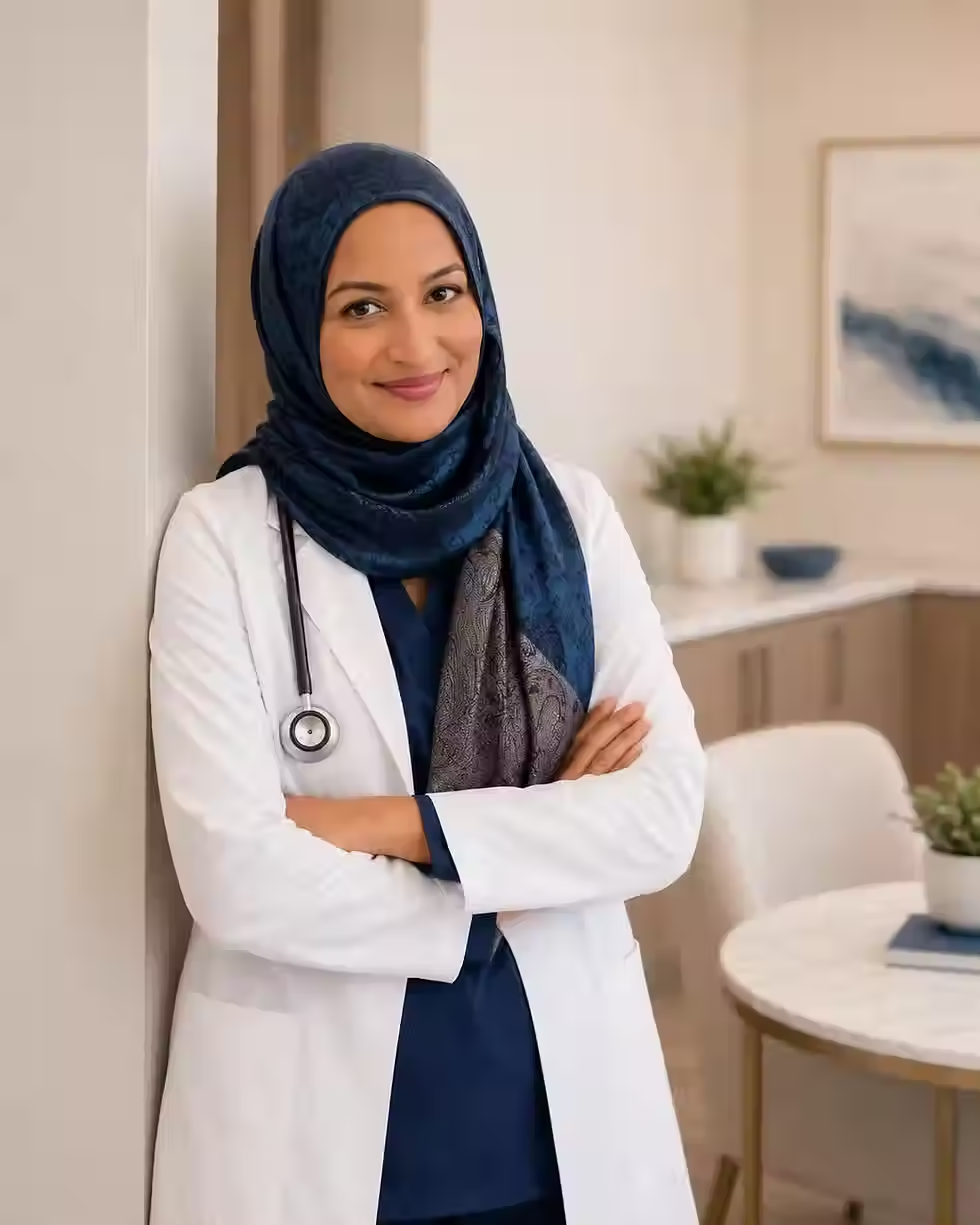
Dr. Nada Farooqui, MD trained in family medicine at the height of the pandemic, in an unopposed program where she learned to do nearly everything a family doctor can do. Then she sat in job interviews and listened to someone else describe how narrow her scope would be.
She is not waiting years to fix that. This fall she opens RAWQ Medicine, a Direct Primary Care practice in Hillsborough, New Jersey, about six minutes from her house. When she recorded this episode, her website was finished, her electronic medical record was chosen, and her lease and membership agreement were days from being signed.
This is what the opening stage actually sounds like, including the money.
Listen to the full episode
Or listen on Apple Podcasts, Spotify or YouTube.
She was trained for full scope, then told to narrow it
Her mother set the standard. Dr. Farooqui grew up watching her mother run her own practice in the Bronx, where patients had her cell phone number and the line between home, the mosque, the community and the clinic barely existed. Her mother is closer to 80 than 70 and still works full time. That old-school family doctor is the one Dr. Farooqui pictured becoming.
Her training delivered on that. She went to medical school at St. George's University and trained at St. Luke's, on the border between Pennsylvania and New Jersey. The program was unopposed, so she did everything: dermatology, gynecology, hepatic conditions, labor and delivery, the intensive care unit, the emergency department.
The interviews took it away. When she interviewed for employed primary care jobs, the message was that her scope would be defined for her. That was the turn. She moved into wound care and hyperbaric medicine instead, work she still loves and will offer at RAWQ Medicine.
Wound care showed her what was missing. Seeing the same patients every week, she found herself pulling out a marker to explain diabetes, offloading, edema and heart failure, while a nurse reminded her she had to move on. Patients started bringing her the questions they had no time to raise with their own doctors. Some told her they did not want to be a burden, or that they had looked it up online instead. She did not want her future patients choosing which of their concerns were worth mentioning.
Why she is fighting for physicians, not only patients
Dr. Farooqui trained during COVID on 12-hour shifts where roughly half the patient list could die between one sign-out and the next, where the intensive care unit ran out of beds and then out of ventilators, and where family medicine residents were having goals-of-care conversations with patients whose families they already knew. She lost an attending physician and mentor, a woman in her fifties, to COVID.
T
he response from above was to keep going. Present a brave front. Do not mention the deaths, the residents in the intensive care unit, the attendings dying. That made her angry.
One senior resident did it differently. The week their attending died, she bought six pizzas, texted the people in the emergency department and the intensive care unit, and gathered everyone during sign-out to talk about her. Go take care of your patients if you need to, she said, but we are going to talk about this.
I'm not just fighting for patients. I'm fighting for physicians and the things we've been through and the things we've sacrificed along the way, however big or small. - Dr. Nada Farooqui
She also tried to talk her mother out of working through the pandemic. Her mother gave her two answers that stayed with her: "I've been serving this community for almost 30 years. How could I leave them now when they need me most?" and, as a religious woman, "How can I answer to God?"
One summit, and the decision was made
Dr. Farooqui had heard about Direct Primary Care once in residency, from a lecturer who was not in primary care. When she asked her attendings, none of them knew what it was, and the consensus was that it sounded fishy, like there must be a catch. She trusted them and let it go.
Then she went to her first DPC summit.
I've never met a group of physicians so happy, so optimistic, so looking forward to the future, and that's what I want it to be. - Dr. Nada Farooqui
It was the people, not the slides. She had a long conversation with the keynote speaker about caring for groups the health care system has let down, and about her own background in the Asian and Muslim communities. She came away thinking about inequity in a way she had not applied to her own practice before.
She left decided. No going back, no insurance, her own practice.
Why the practice is called RAWQ
The name took months. Everything else was ready first.
Dr. Farooqui is South Asian, first generation American born, with parents from Hyderabad, India, and she learned Arabic to read the Quran. In a conversation with a friend about what she wanted the practice to feel like, transparent and clear and easy, with no patient asking why they are being billed, one word came back.
It literally means after the dirt and grit has settled in water and it's just clear and translucent and transparent and beautiful. That's what the meaning is. - Dr. Nada Farooqui
The brand followed the name. Once the word was settled, the colors were obvious to her: the cobalt blue of a lake in the Poconos, where her family hikes and camps. Her earlier palette of ivories and greens went out the window.
How her family planned the money
They started with the household, not the practice. Before Dr. Farooqui decided to open, she and her husband went through their entire family budget: income, spending, lifestyle. She budgeted for one extra vacation a year. Only then did she work out what she needed to earn after taxes, what to charge, and how to grow.
Timing was deliberate. Her husband is an interventional pain physician. She waited until he was about a year and a half into a job he was secure and happy in, and let the family's buffer grow, before leaving her own position. They have three children, ages six, three and two.
She spent where judgment mattered. A lawyer she trusted and who was known locally to review her agreements. A CPA who can grow with the practice. The lease, which came in a little higher than she liked, in an area she loves. The electronic medical record, chosen after trialing more systems than she probably needed to.
She saved where she could do it herself. Her website was built inexpensively by someone she knew and trusted from her Muslim community. She took her own headshots and runs her own social media. She deliberately did not build out the leased space, because that money was not there with three young children.
She knows when it gets hard. Month four or five, which she expects to be bare-knuckle. Having projected a year of cashflow, she says, makes that stretch less frightening, because you have some control instead of a surprise.
What she is building in Hillsborough
Wound care, at a flat fee, for members and non-members. Two wound care jobs she was interviewing for were withdrawn partway through, once the 2027 reimbursement schedule came out and those employers decided to stop offering wound care at all. Visiting nurse services in her area are dropping wound care patients. People she knows have parents with wounds and nowhere to go. She is trained for this, she uses disposable instruments bought in bulk, and her patients will know the price before the visit instead of discovering a physician fee and a facility fee afterward.
Home visits for a select number of households.
A pay-it-forward fund so that people who can give more can sponsor memberships for people who cannot. Her area has many small business owners and farmers. The longer-term goal is a nonprofit that can fully sponsor memberships. The reason is a man she stood behind in a pharmacy line who had to put a medication back because he could not pay for it.
Acupuncture, once she finishes certification, offered by a physician precisely because it is an area where training is not always regulated.
Community programming she will not charge for: cooking and portion-control classes modeled on something an attending of hers ran before the pandemic, free lectures at the library and the YMCA, a practice-wide hike, and a paint night a friend has already volunteered to run. She is on the PTA. She wants to be the town doctor, not only the clinic.
Getting patients before the doors open
The fair worked best. Five nights at the Hillsborough Rotary Fair, and people stopped, which surprised her, because everyone is tired and sugar-high and there with their kids by nine o'clock. One parent works with people with Down syndrome and told her that community never gets the care it needs. One mother had just had a big bill and asked, I heard about this on TikTok, we have it here in town, where are you?
Her community already knew her. The mosque, the school, adult programming at the library, three years of living in town and seven in the county. On social media she had followers who knew her as a doctor who worked far away. Now they know she is available.
Local colleagues are referring without being asked. A direct specialty care cardiologist in New Jersey, who thought he was the only one in the state doing membership-based cardiology, sent her the names of everything he uses, top to bottom. A pharmacist from her mosque asked her for digital copies of her card and her trifolds. Her point about this is worth repeating: the best advice she has gotten has been free.
Her first visit is 60 minutes and starts with a question
Not a checklist. Dr. Farooqui opens with what are your concerns, and she means the ones that are not strictly clinical: a family history that worries you, getting older without children yet, a high-powered job and a life that is not where you want it. She believes 60 minutes is the right length, and that beyond an hour both people are tired and ready for coffee.
After the first couple of visits, the goal is what someone at the summit called tucking the patient in: the big things addressed, the age, background and family history items checked. Where the practice goes after that depends on who walks through the door.
Her advice to the doctor who is next
Know your vision before anything else. She had a timeline, a plan and numbers. What tripped her up were the questions she had not decided, like how she wanted to handle wound care, which her website designer kept needing text for. Writing the vision down answers the rest on its own: which electronic medical record, how much space, where, what hours.
Then go. She is clear-eyed that she is sinking money in and not making any yet, and that it is frightening.
Those are just emotions. You're scared. There's a reason to be scared. But shut it down for now, because you just need to keep walking the path. - Dr. Nada Farooqui
Frequently Asked Questions
Who is Dr. Nada Farooqui? Dr. Nada Farooqui, MD is a family physician in Hillsborough, New Jersey and the founder of RAWQ Medicine, a Direct Primary Care practice opening in fall 2026. Dr. Farooqui attended medical school at St. George's University and trained in family medicine at St. Luke's, in an unopposed program on the Pennsylvania and New Jersey border, during the height of the COVID-19 pandemic. Before opening RAWQ Medicine, Dr. Farooqui practiced wound care and hyperbaric medicine.
What is RAWQ Medicine? RAWQ Medicine is a Direct Primary Care practice founded by Dr. Nada Farooqui, MD, opening in fall 2026 in Hillsborough, New Jersey. RAWQ Medicine is membership based and does not bill insurance. The practice will also offer wound care to non-members at a flat fee, home visits for a select number of households, and a pay-it-forward fund that lets community members sponsor memberships for others.
What does the name RAWQ mean? RAWQ, spelled R-A-W-Q, comes from an Arabic word that describes water after the dirt and grit have settled, when it has turned clear, translucent and transparent. Dr. Nada Farooqui, MD chose the name because she wanted her Direct Primary Care practice to feel that clear to patients, with no confusing bills and nothing hidden. Dr. Farooqui spent months on the name before the meaning was explained to her in conversation with a friend, and she knew immediately it was the right one.
Where is RAWQ Medicine located? RAWQ Medicine is located in Hillsborough, New Jersey. Dr. Nada Farooqui, MD chose a space about six minutes from her home, down from a commute of nearly an hour at her previous job. Dr. Farooqui lives in Hillsborough, her children attend school there, and she serves on the PTA.
When does RAWQ Medicine open? RAWQ Medicine is opening in fall 2026. At the time of the My DPC Story interview, Dr. Nada Farooqui, MD had finalized her website, was signing with an electronic medical record, and expected to finalize her membership agreement and sign her lease within the same week.
Can a physician open a Direct Primary Care practice a few years out of residency? Yes. Dr. Nada Farooqui, MD opened RAWQ Medicine a few years after finishing family medicine residency, without spending years in employed practice first. Dr. Farooqui says the fear is real, and her advice is to be clear about what you are good at, get further training or shadowing for anything you want to add, and know when to refer. She points out that family medicine training covers a wide scope, and that physicians should keep learning throughout their careers regardless of when they open.
Why did Dr. Nada Farooqui leave employed medicine? Dr. Nada Farooqui, MD left employed medicine for two main reasons. First, during interviews for employed primary care positions, she was told how narrow her scope would be, despite having trained in an unopposed family medicine program where she learned to manage dermatologic, gynecologic and hepatic conditions. Second, in her wound care role she found patients bringing her primary care questions they had no time to raise with their own doctors, and she did not want her patients to feel they were a burden or had to pick and choose which concerns to mention.
Does a Direct Primary Care practice bill insurance? No. A Direct Primary Care practice charges patients a membership fee directly and does not bill insurance. Dr. Nada Farooqui, MD describes the decision this way: she is taking a leap of faith, starting her own practice, and it is not going to use insurance. This is what allows a Direct Primary Care physician to set visit lengths, charge flat and transparent fees, and decide the scope of care without an insurer or employer defining it.
How did Dr. Nada Farooqui plan the finances for opening her practice? Dr. Nada Farooqui, MD started with her household budget rather than the practice. Before deciding to open, she and her husband reviewed their entire family budget, including income, spending and lifestyle, and budgeted for one additional vacation a year. From that she worked out what she needed to earn after taxes, then what to charge, how to grow and what to spend money on. She also waited until her husband, who is an interventional pain physician, was about a year and a half into a secure job he was happy in, and she let the family's financial buffer grow before leaving her own position. Dr. Farooqui has projected her cashflow for the first year.
What did Dr. Nada Farooqui spend money on when opening her Direct Primary Care practice, and where did she save? Dr. Nada Farooqui, MD spent on a lawyer she trusted to review her agreements, a CPA who could help her as the practice grows, her lease, and her electronic medical record, which she selected after trialing many options. She saved by having her website built inexpensively by someone she knew and trusted from her Muslim community, taking her own headshots, and running her own social media. She also made a deliberate decision not to build out a leased space, because the family did not have that kind of money with three young children.
What is the hardest month financially when opening a Direct Primary Care practice? Dr. Nada Farooqui, MD expects month four or five to be the hardest, which she describes as a bare-knuckle stretch. Her point is that projecting cashflow in advance makes that period less frightening, because a physician who knows when the deepest dip is coming has some control over it rather than being surprised by it.
Can a Direct Primary Care practice offer wound care? Yes. Dr. Nada Farooqui, MD will offer wound care at RAWQ Medicine from the day it opens, including to patients who are not members, at a flat fee. Dr. Farooqui trained extensively in wound care and hyperbaric medicine and uses mostly disposable instruments, which she buys in bulk. She notes that a flat fee is very different from the old arrangement, where patients faced a physician fee and a facility fee and often could not find out the cost in advance.
Why is wound care becoming harder for patients to find? Dr. Nada Farooqui, MD reports that two wound care positions she was interviewing for were withdrawn partway through the process, once the 2027 reimbursement schedule was published, because those employers decided to stop offering wound care altogether. She also says visiting nurse services in her area are dropping wound care patients. The result is that people with wounds, including homebound patients and those with sacrococcygeal ulcers, have nowhere to go, which is one reason she is offering wound care and home visits at RAWQ Medicine.
Can people who are not members pay for services at a Direct Primary Care practice? Yes. At RAWQ Medicine, Dr. Nada Farooqui, MD will offer wound care to non-members at a flat fee from the start, and she plans to offer acupuncture the same way once she completes her acupuncture certification. Dr. Farooqui's reasoning is that these services are needed in her community, she is trained to deliver them, and a flat fee means the patient knows the cost before the visit.
What is a pay-it-forward fund in a Direct Primary Care practice? A pay-it-forward fund lets patients and community members who can afford to give more sponsor memberships for people who cannot. Dr. Nada Farooqui, MD is starting RAWQ Medicine with such a fund, because her area has many small business owners and farmers. Her longer-term goal is to start a nonprofit so that memberships can be fully sponsored. Dr. Farooqui says the motivation came from standing in line at a pharmacy behind a man who had to decline a medication he could not pay for.
Does Dr. Nada Farooqui offer home visits? Yes. Dr. Nada Farooqui, MD will offer home visits to a select number of households through RAWQ Medicine. She cites patients who need wound care at home and have no one left to provide it as part of the reason.
How long is the first visit at RAWQ Medicine? The first visit at RAWQ Medicine is 60 minutes. Dr. Nada Farooqui, MD believes a first visit needs at least 60 minutes, and no more than that, because beyond an hour both the physician and the patient are tired. She opens that visit with an open-ended question, asking what the patient is worried about, including concerns that are not strictly clinical, rather than working through a checklist.
How do you get patients before a Direct Primary Care practice opens? Dr. Nada Farooqui, MD built her waitlist through her existing community rather than paid advertising. She spent five nights at the Hillsborough Rotary Fair talking to people who stopped at her table, has done adult programming at the local library, and is known at her mosque and through her children's school and the PTA. She also posts on social media to an audience that already followed her but previously knew her as a doctor who worked far away. Local physicians and a pharmacist she knows have offered to refer patients and distribute her cards and trifolds without charge. Dr. Farooqui says the conversations that convert best are the ones where she can talk plainly about what medications cost and where to get them.
What does Dr. Nada Farooqui say is the most important thing to get right before opening? Dr. Nada Farooqui, MD says the vision matters more than the timeline, the plan or the numbers, important as those are. She spent a great deal of time going back and forth with her website designer on questions she had not yet decided, such as how she wanted to handle wound care, and realized she had to revisit her whole vision to answer them. Her advice is to write the vision down, because it then answers the downstream questions on its own: which electronic medical record to use, how much space is needed, where the practice should be, and what the hours will be.
How did training during COVID affect Dr. Nada Farooqui's decision to open a Direct Primary Care practice? Dr. Nada Farooqui, MD trained in family medicine at the height of the COVID-19 pandemic, working 12-hour shifts on a service where roughly half the patient list could die between one shift and the next, and where the intensive care unit had no beds and no ventilators left. She lost an attending physician and mentor, who was in her fifties, to COVID. Dr. Farooqui says physicians were expected to keep their heads down and present a brave front, and that this made her angry. A senior resident who gathered colleagues over pizza to talk about the attending who had died showed her what autonomy looked like in practice. Her conclusion was that the system was not built to support physicians or patients, and that physicians sometimes have to build what they need themselves.
More Resources From My DPC Story
My DPC Story podcast: more than 300 episodes of physicians telling their own Direct Primary Care stories, across six seasons.
The Toolkit Magazine: the magazine for the Direct Primary Care physician, with the tools and the numbers behind the stories.
Caring Directly: the patient-facing map for finding a physician-led practice near you.
The DPC Directory: vendors and resources for physicians building a Direct Primary Care practice.
DPC Starter Guide: free, and the right first step if you are still deciding.
First Year Dashboard: free, for tracking the first year once you have opened.
The Physician Owner's Planner: built to get the business side of your practice organized.
Related Posts
Opening your own practice, or stuck on a step? Leave a voicemail at mydpcstory.com/contact. Tell Maryal your question, your challenge or the win you are proud of, and you might hear it answered on a future episode.
Sign up for the My DPC Story newsletter so you are the first to know when the next Toolkit Magazine drops. If this story moved you, please leave a five-star review on Apple Podcasts, and follow @mydpcstory.
Tags: direct primary care, DPC, opening a DPC practice, how to start a direct primary care practice, DPC startup costs, leaving employed medicine, direct primary care New Jersey, DPC New Jersey, wound care, first year of DPC, residency to DPC, physician autonomy, physician burnout, family medicine, independent physician, membership medicine, Nada Farooqui, RAWQ Medicine, Maryal Concepcion, My DPC Story


Comments